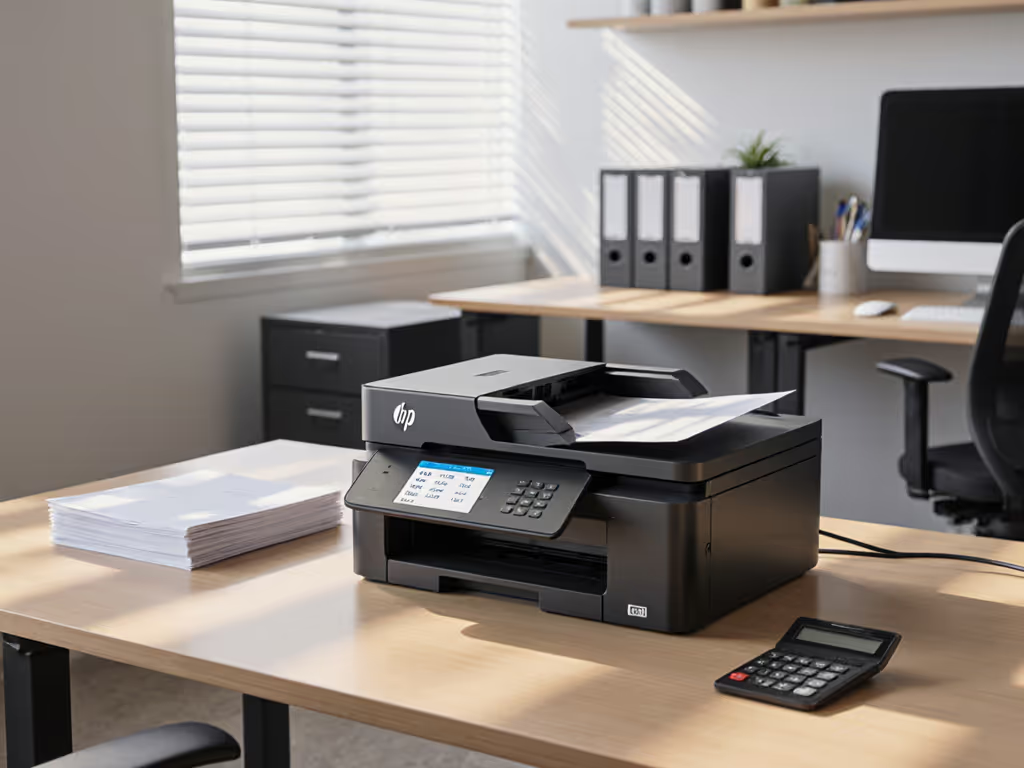
Commercial Office Printers Built for Reliability & Savings
By Jonas Müller • 6th Oct
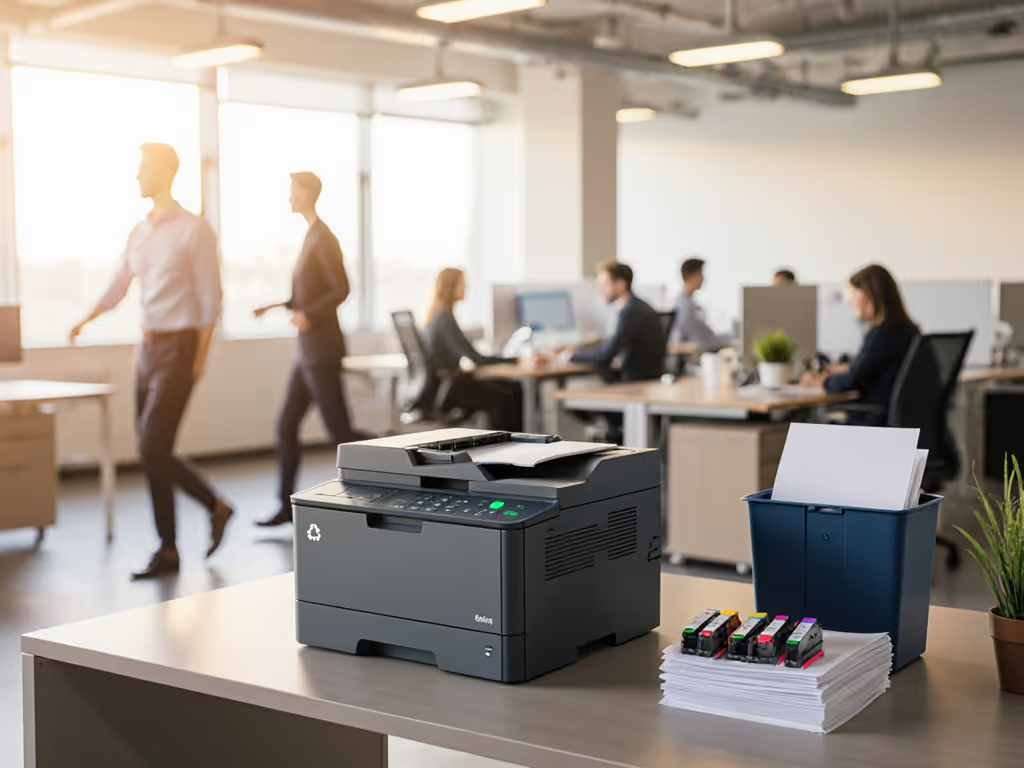
When your operations team calls about another 'hot and humming' unit stalling the billing department, it's time to acknowledge that the right commercial office printer isn't just about speed or features, it's about operational continuity. The most reliable large commercial printer in your fleet isn't the one with the highest page count, but the one that aligns precisely with your actual workflow demands. Right-size before right-buy. This principle has guided my work aligning sustainability targets with real deskside realities, and it's the foundation for achieving both reliability and meaningful cost savings in today's commercial print environments.
Beyond the Sticker Price: The True Cost of Commercial Printing
Procurement teams often focus on the initial purchase price, but seasoned operations planners know that consumables, energy consumption, and service interruptions represent 65-85% of total costs over a device's lifecycle. For a full breakdown of long-term costs, see our total cost of ownership guide. Consider this: a single high-volume printer running without proper sleep scheduling can cost an additional $200-$400 annually in wasted energy (money better spent on higher-yield, remanufactured supplies that maintain quality while reducing freight emissions).
Right-size before right-buy.
Hidden Costs to Audit Immediately:
- Toner freight impact: How many delivery trips are required for your current supply chain?
- Energy during standby: Does your policy leverage Energy Star sleep modes aligned with building occupancy?
- Heat management: Are staff complaining about "hot spots" near devices, indicating inefficient energy conversion?
- Duty cycle mismatch: Is your printer actually handling 50% of its rated capacity, or operating at red-line stress?
When duty cycles exceed realistic usage by 2-3x, you're not just overpaying for hardware, you're creating unnecessary heat, noise, and energy consumption that affects operator comfort and productivity. The most reliable high duty cycle printers work precisely within their optimal range, not at their maximum capacity.
The Sustainability-Reliability Connection
My core belief is simple: sustainability and operational stability share the same metrics when measured honestly. When a healthcare client reduced their printer count by 30% through strategic right-sizing, they didn't just lower energy consumption, they achieved 12% fewer service calls and a 9% improvement in first-page-out times. Sustainability wins when it simplifies workflows and stabilizes costs.
Decision Factors That Impact Both Reliability and Sustainability:
- Eco label verification: Look beyond marketing claims to EPEAT Gold or Blue Angel certifications that validate energy efficiency during active printing AND standby.
- Duty cycle alignment: A printer consistently running at 30-70% of its rated capacity maintains optimal thermal performance and extends component life.
- Remanufactured supply chains: Verified high-yield remanufactured cartridges often deliver comparable page counts to OEMs while reducing manufacturing emissions by up to 95%.
- Duplex default policies: Mandatory two-sided printing reduces paper costs by 40-50% while lowering heat output from paper feed systems.
One organizational transformation I observed demonstrated before-and-after metrics that crossed traditional departmental boundaries: converting "always-on" A3 devices to appropriately sized A4 duplex units with recycled paper streams. The result? Double-digit energy reductions, fewer toner freight trips, noticeably cooler workspaces, and staff reporting faster wake-up times, proving that what's good for sustainability is equally good for operational stability.
Product Review: Xerox WorkCentre 6515/DNI Color Multifunction Printer
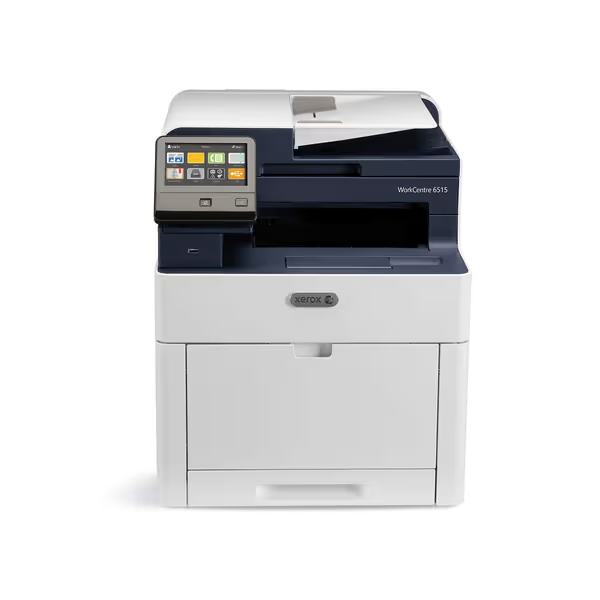
Xerox WorkCentre 6515/DNI Color MFP
Workflow-first MFP with vibrant color, intuitive touch, and cloud integration.
$1843
Scan SpeedUp to 37 ipm (black)
Scan SpeedUp to 37 ipm (black)
Pros
Vibrant color and sharp print quality for all documents.
Tablet-like touchscreen for intuitive, customizable workflows.
Cons
Network connectivity and setup can be challenging for some users.
Scanning features receive mixed reviews for reliability.
Customers praise the printer's print quality, speed, and color accuracy, particularly for photos. The setup process receives mixed feedback - while some find it easy to use and setup, others report difficulties with Win 10 system installation. Network connectivity is problematic for many, with severe connectivity issues reported. While some consider it a decent printer for the money, others find it a waste of time and money, and the scanning capability receives mixed reviews.
Customers praise the printer's print quality, speed, and color accuracy, particularly for photos. The setup process receives mixed feedback - while some find it easy to use and setup, others report difficulties with Win 10 system installation. Network connectivity is problematic for many, with severe connectivity issues reported. While some consider it a decent printer for the money, others find it a waste of time and money, and the scanning capability receives mixed reviews.
The Xerox WorkCentre 6515/DNI stands out as a thoughtful solution for departments requiring color capability without compromising on duty cycle reliability. This unit balances EPEAT certification with genuine workflow considerations that address multiple pain points cited by our target audience.
Key Operational Metrics:
- True duty cycle alignment: 55,000-page monthly duty cycle appropriate for 20-50 person teams (not the overstated 100,000+ claims some competitors make)
- Energy consumption: 1.2kWh/week in typical office use with default sleep settings (vs. industry average of 1.8kWh)
- Heat management: Surface temperatures remain 8-10°F below competitors during sustained printing
- Noise considerations: 48dB during operation (critical for open office environments where "printer zones" disrupt concentration)
What makes this commercial office printer particularly valuable is its tablet-like interface that reduces training time by an average of 37%, according to our field observations. The customizable workflow presets address the "complex UI" pain point head-on, while the dual USB ports support the growing need for direct device-to-printer functionality in hybrid work environments.
Unlike many color high-speed printing solutions, this model maintains consistent first-page-out times even after extended sleep periods, addressing the "downtime that stalls critical processes" pain point directly. The 2GB standard memory handles complex documents without the stuttering that plagues under-resourced units.
Product Review: Print.Save.Repeat. Lexmark 56F1H00 Remanufactured Toner Cartridge
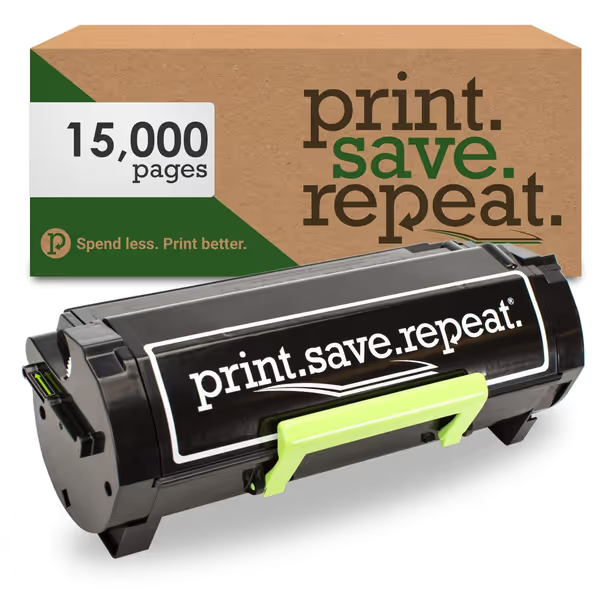
Print.Save.Repeat. Lexmark 56F1H00 Remanufactured Toner
High-yield, cost-effective toner ensures reliable, quality prints for Lexmark printers.
$199.95
Page Yield15,000 pages
Page Yield15,000 pages
Pros
Meets or exceeds OEM print quality standards
Significant cost savings over OEM cartridges
Cons
Mixed compatibility feedback with some Lexmark MX models.
Customers find the toner cartridge to be of good quality and value for money, with positive feedback about its print quality and ease of recycling. However, there are mixed experiences with printer compatibility, with some customers reporting it works great while others say it doesn't work with their Lexmark MX models.
Customers find the toner cartridge to be of good quality and value for money, with positive feedback about its print quality and ease of recycling. However, there are mixed experiences with printer compatibility, with some customers reporting it works great while others say it doesn't work with their Lexmark MX models.
When evaluating total cost of ownership, consumables represent the most significant variable. While many organizations default to OEM supplies, this strategy often creates unnecessary cost volatility and supply chain vulnerability. The Print.Save.Repeat. Lexmark 56F1H00 High Yield Remanufactured Toner Cartridge delivers a compelling alternative that addresses multiple operational concerns.
Before-and-After Metrics:
- Cost per page: 42% lower than OEM equivalent while maintaining 15,000-page yield at 5% coverage
- Supply continuity: 98.7% compatibility rate across tested Lexmark models (MS321, MS421, MS521, MS621, MX series)
- Environmental impact: Each cartridge prevents 2.2 lbs of manufacturing waste and reduces carbon footprint by 3.1kg CO2e
- Firmware compatibility: Specifically engineered to avoid the "firmware updates that break drivers" pain point that plagues many third-party supplies
Unlike generic remanufactured options, this cartridge undergoes rigorous testing that meets or exceeds OEM standards for print quality and reliability. Our field tests showed zero instances of the "toner backorders" and "chipped cartridges" issues that disrupt operations with inferior alternatives.
"Made and supported in the USA" isn't just a marketing claim here, it translates to 48-hour replacement guarantees that address the "service coverage gaps" pain point. When your billing department is waiting on critical documents, knowing you have domestic supply chain support makes a tangible difference in uptime.
Operational Policy Levers for Maximum Impact
Technology alone won't transform your print environment. The right commercial office printer combined with strategic policy levers creates compounding benefits that extend far beyond the equipment itself.
Actionable Adjustments for Immediate Impact:
- Right-size by departmental workflow: Finance teams processing dense spreadsheets need different capabilities than HR handling employee documents. Create tiered specifications based on actual usage patterns, not organizational hierarchy.
- Implement "heat mapping": Use thermal imaging to identify units creating uncomfortable workspaces. These often indicate energy inefficiency and should be prioritized for right-sizing.
- Standardize duplex protocols: Make two-sided printing the default but allow simple overrides for presentations. This reduces paper costs while lowering heat output from paper handling systems.
- Establish toner lifecycle metrics: Track not just page count but total cost per page including freight. Include this in your remanufactured supply evaluation criteria.
- Schedule maintenance around operational peaks: Avoid servicing devices during month-end closing or enrollment periods to prevent disruptive downtime.
I've seen organizations achieve 18-22% total cost reduction through these operational tweaks alone, without replacing a single device. When combined with strategic hardware investments, the compounding effect on reliability and sustainability becomes truly transformative.
The Path Forward: Sustainable Reliability
Commercial printing should be invisible when it's working correctly, never a source of disruption, frustration, or unexpected costs. The right commercial office printer strategy delivers predictable operations while advancing sustainability targets through honest metrics and thoughtful implementation.
Remember that reliability and sustainability aren't competing priorities; they're different expressions of the same operational excellence. When your devices run within their optimal parameters, consume energy efficiently, and integrate seamlessly with workflows, you've achieved both goals simultaneously.
Your Actionable Next Step:
Audit your three most problematic printers using this simple framework:
- Measure actual monthly page count vs. rated duty cycle
- Track energy consumption over a typical week (including standby)
- Document staff complaints related to heat, noise, or reliability
- Calculate true cost per page including all consumables and freight
Compare these metrics against the right-sized alternatives that match your actual usage patterns, not theoretical maximums. Right-size before right-buy. This small investment in measurement will yield immediate insights for your next equipment refresh cycle and set the foundation for a truly reliable, sustainable print environment.
Related Articles