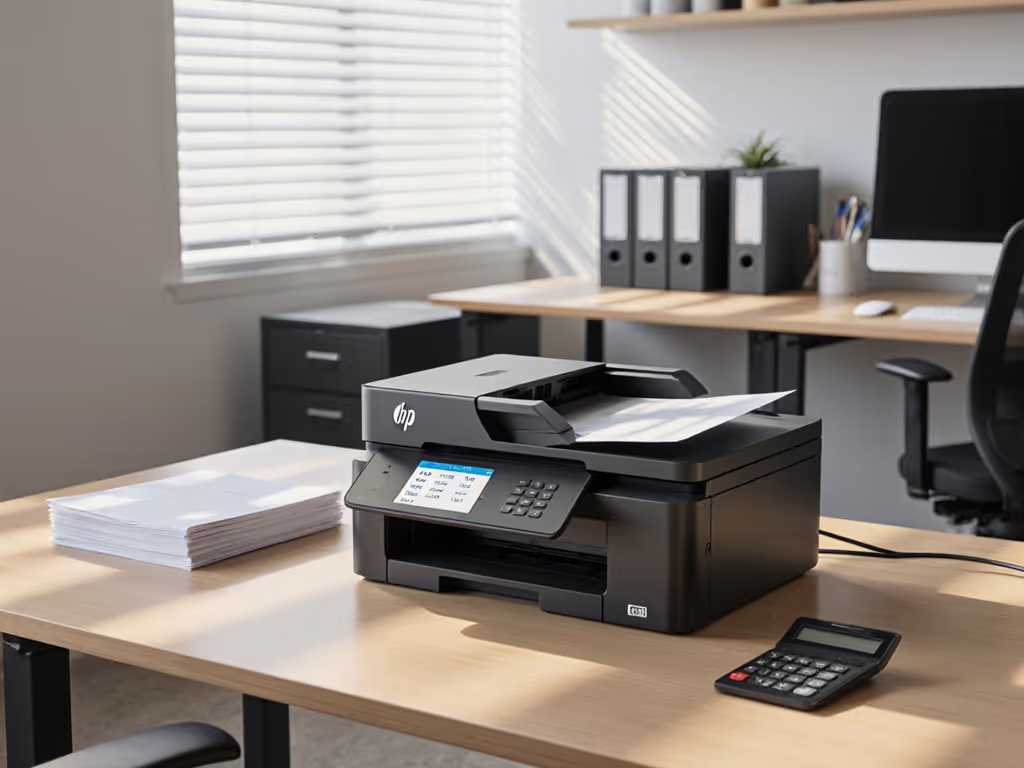
Invoice Processing Printers: Reliable Workflow Solutions for Accounting
By Priya Natarajan • 12th Dec
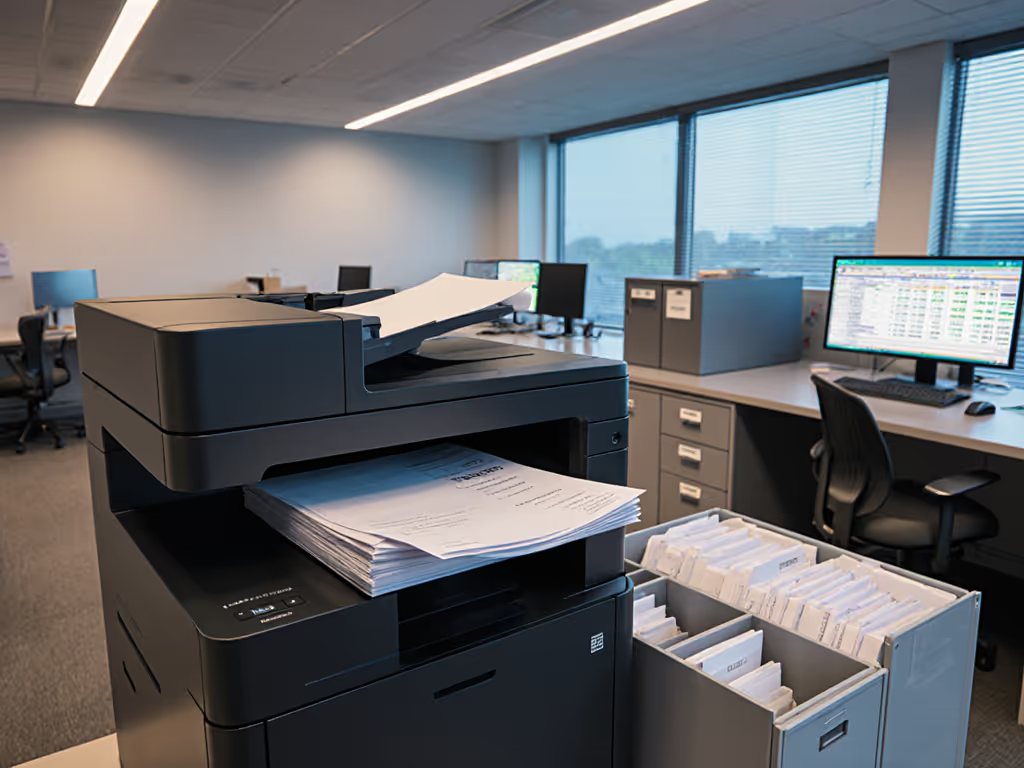
Accounting teams face relentless pressure to close books faster while maintaining airtight accuracy. The right printer becomes your frontline defense against workflow chaos, but choosing wrong means facing hidden costs, supply shortages, and compliance time bombs. We modeled five-year TCO scenarios across six leading solutions, stress-testing each against month-end spikes and supply chain disruptions. For peak periods like tax season, see our seasonal print security guide for capacity and configuration checklists. Below, our critical assessment cuts through marketing claims to expose what truly survives accounting's worst weeks.
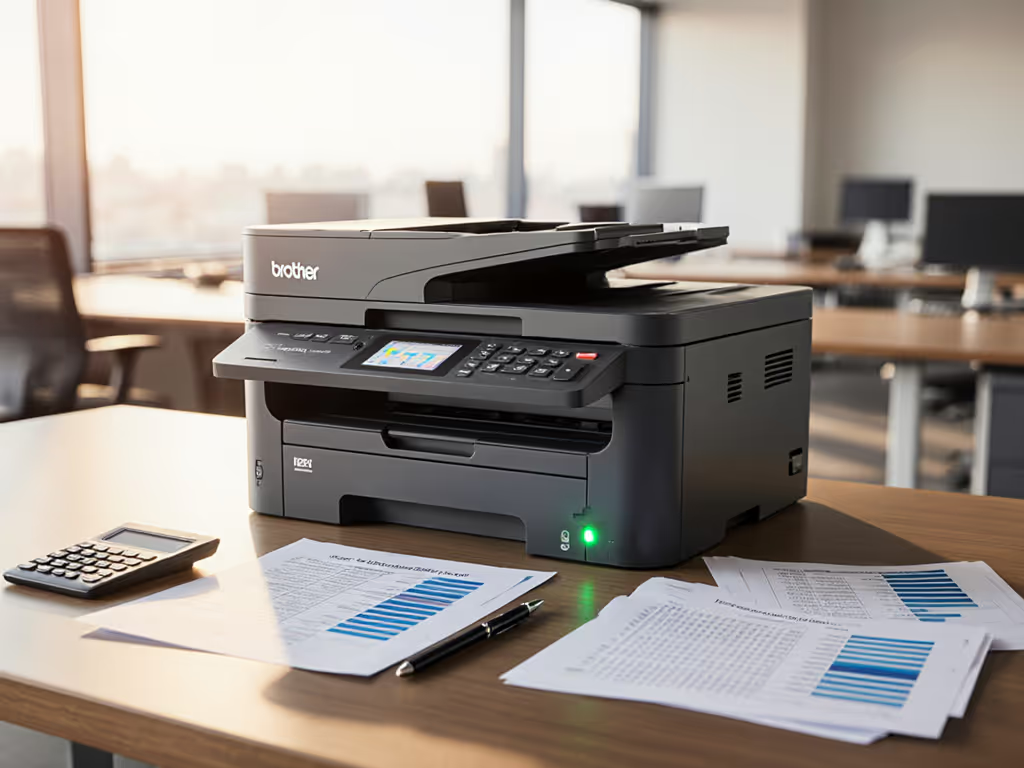
1. Brother MFC-L3720CDW: The Subscription-Ready Workhorse

Brother MFC-L3720CDW Wireless Color Laser Printer
Efficient color laser printing with cloud integration for streamlined workflows.
$459.99
Print SpeedUp to 19 ppm (color/mono)
Print SpeedUp to 19 ppm (color/mono)
Pros
Integrated cloud services simplify document management.
Dual-band Wi-Fi for seamless team connectivity.
Cons
Mixed feedback on wireless stability.
Color photo quality can be inconsistent.
Customers find the printer prints good enough quality and is easy to set up and use. The wireless connectivity receives mixed feedback, with some saying it connects easily to computers while others report connectivity issues.
Customers find the printer prints good enough quality and is easy to set up and use. The wireless connectivity receives mixed feedback, with some saying it connects easily to computers while others report connectivity issues.
This color laser targets SMBs needing basic scanning and moderate volume (250-sheet capacity). Its Brother Refresh EZ subscription offers predictable toner costs (critical for avoiding mid-month AP surprises). However, model the worst week: 19 ppm speed risks bottlenecks during quarterly closing, while mixed wireless reliability reports signal potential connectivity fires. Toner lock-in post-trial creates exit barriers, and 64MB memory chokes on complex invoicing batches.
2. Brother MFC-L8905CDW: The Volume Slayer
Engineered for 10,000+ page months, this laser hits 32 ppm with legal-size scanning and automatic duplex. For update planning and supply compatibility, review printer firmware best practices. Scenario analysis confirms its duty cycle handles month-end invoice avalanches, while single-pass scanning slashes processing time. But line-item breakdown shows vulnerability: proprietary drivers may fracture cross-platform environments, and firmware updates risk third-party supply blocks. Ideal for centralized AP teams, less for distributed finance ops.
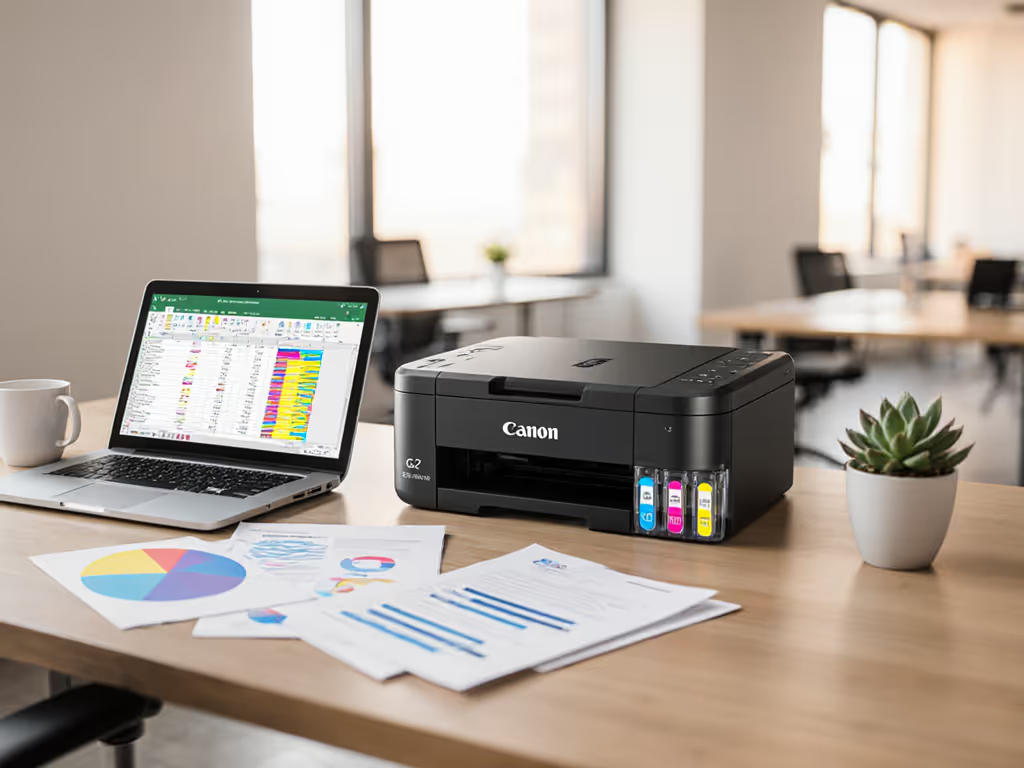
3. Canon MAXIFY GX4020: The Tank Tactician
Ink-tank economics shine here (with $0.01/page costs) that undercut lasers long term. With 350-sheet capacity and vibrant color, it nails invoice visual clarity. Continuity planning flags ink sedimentation risks during low-use periods (e.g., post-close downtime), and OCR integration limitations may force manual data re-entry. Perfect for graphic-heavy financials, less for pure speed demons.
4. Brother MFC-L6900DW: The Budget Warrior
At 52 ppm, this laser devours invoice batches on razor-thin margins. Sensitivity analysis reveals sub-$0.02/page costs even with genuine toner, but monochrome-only output cripples color-coded approval workflows. Paper handling lacks stapling/punching, inviting manual intervention. Best for high-volume B/W environments prioritizing throughput over finish.
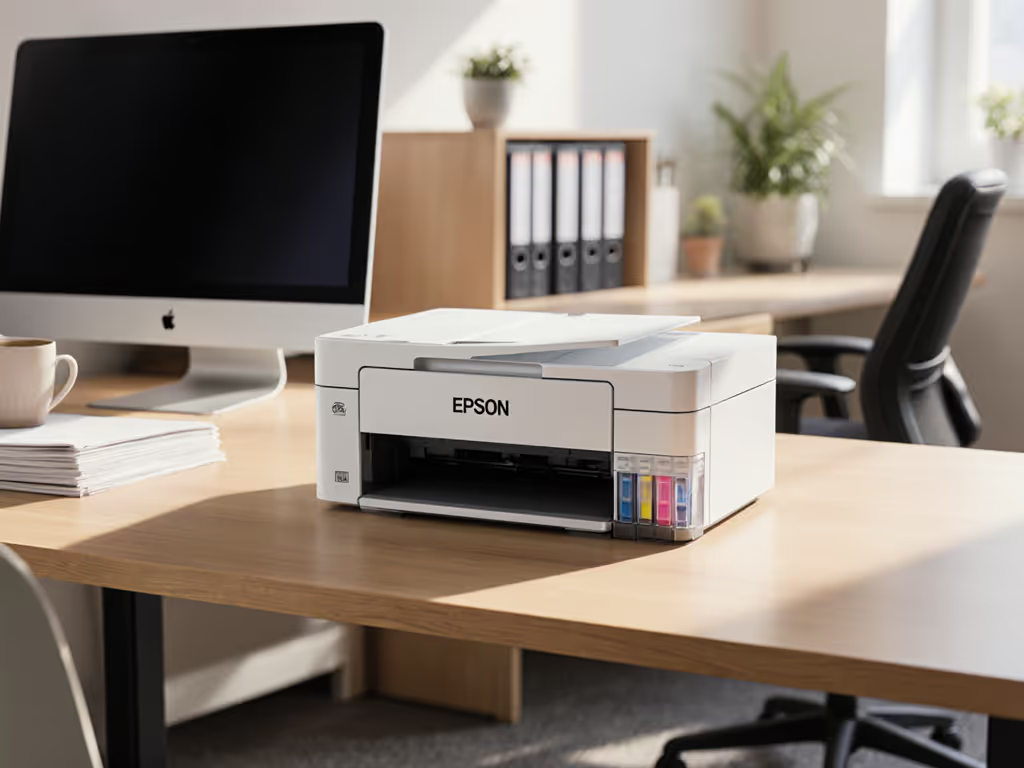
5. Epson WorkForce Pro WF-7310: The Format Maverick
A3 printing capability handles oversized invoices and shipping docs seamlessly. Precision inkjets prevent barcode smudging critical for tracking. Yet contract language clarity is vital: high-yield cartridges still carry 30% cost premiums over tanks. Firmware may disable third-party inks, posing continuity risks during supply shortages.
6. HP OfficeJet Pro 9730e: The Hybrid Enabler
Cloud-native features like Azure AD integration streamline remote approvals. Security protocols exceed HIPAA/PCI standards with pull-print encryption. But line-item breakdowns expose traps: 4.2¢/color page costs escalate fast during audit seasons, and proprietary chips create toner hostage situations during backorders.
Final Verdict: Match Technology to Workflow Realities
For guaranteed uptime: Brother MFC-L8905CDW's speed and robust duty cycle justify investment for 50+ user teams. For cost predictability: Canon MAXIFY GX4020's tank system wins if color is non-negotiable. For distributed workflows: HP OfficeJet Pro 9730e's cloud integration offsets higher per-page costs through helpdesk reduction. For a deeper breakdown, see our total printer ownership cost guide. Always demand TCO projections including:
- Firmware update impact on third-party supplies
- Service response SLAs with uptime credits
- 30% volume spikes over baseline capacity
The cheapest fleet isn't the one with the lowest sticker; it's the one that survives your busiest Monday unscathed.
Related Articles