FISMA Compliant Printers: Eliminate Hidden Costs
By Priya Natarajan • 3rd Dec
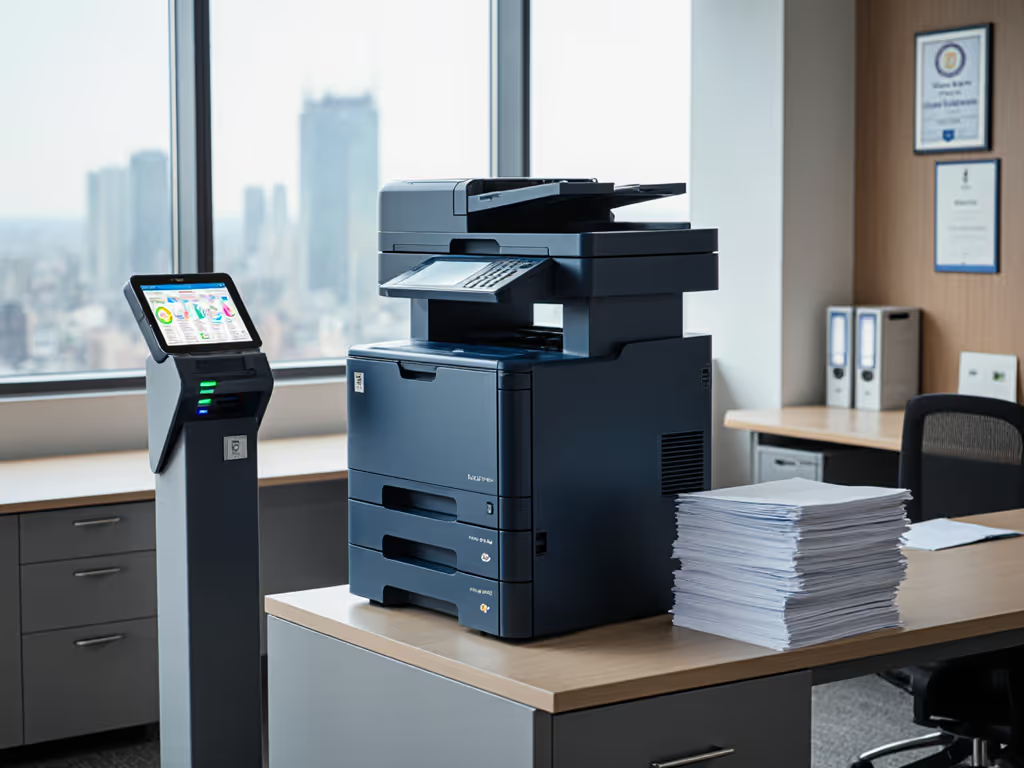
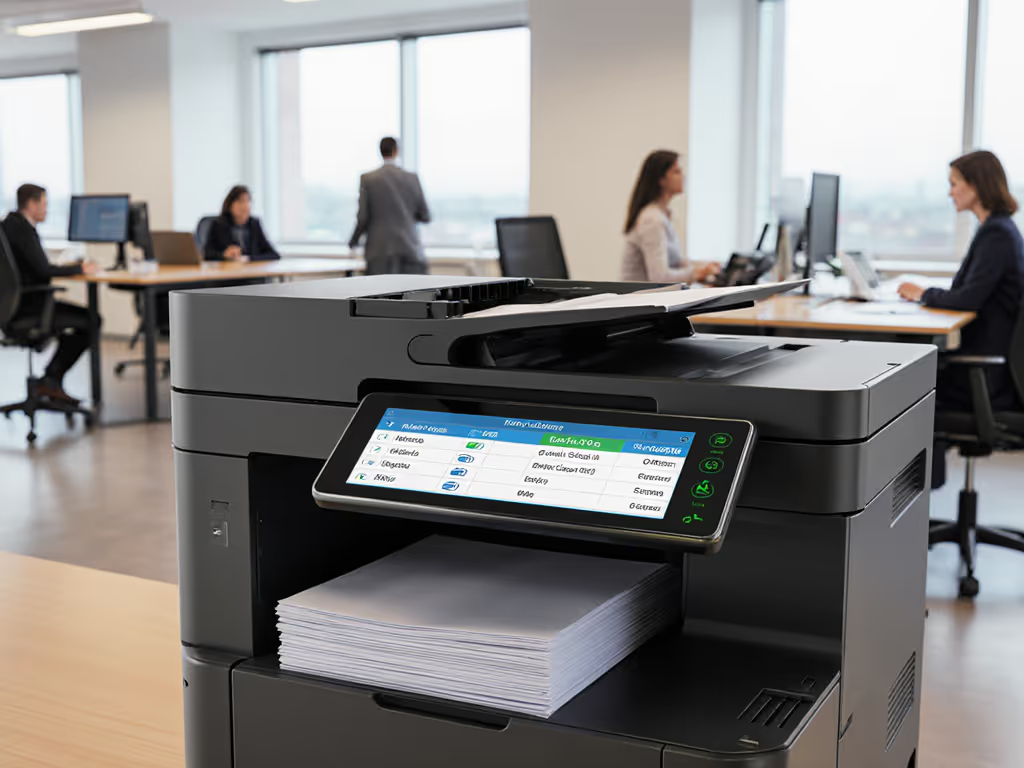
When you source government compliant printers, federal printing standards become your baseline, not an add-on. These devices aren't just output machines; they're potential access points to your entire network. Yet too many teams fixate on upfront costs while ignoring how FISMA gaps trigger hidden lifetime expenses: security breaches, unplanned downtime, and compliance penalties. Let's dissect where predictability unravels and how to lock it in.
Why FISMA Compliance Matters Beyond Just "Checking Boxes"
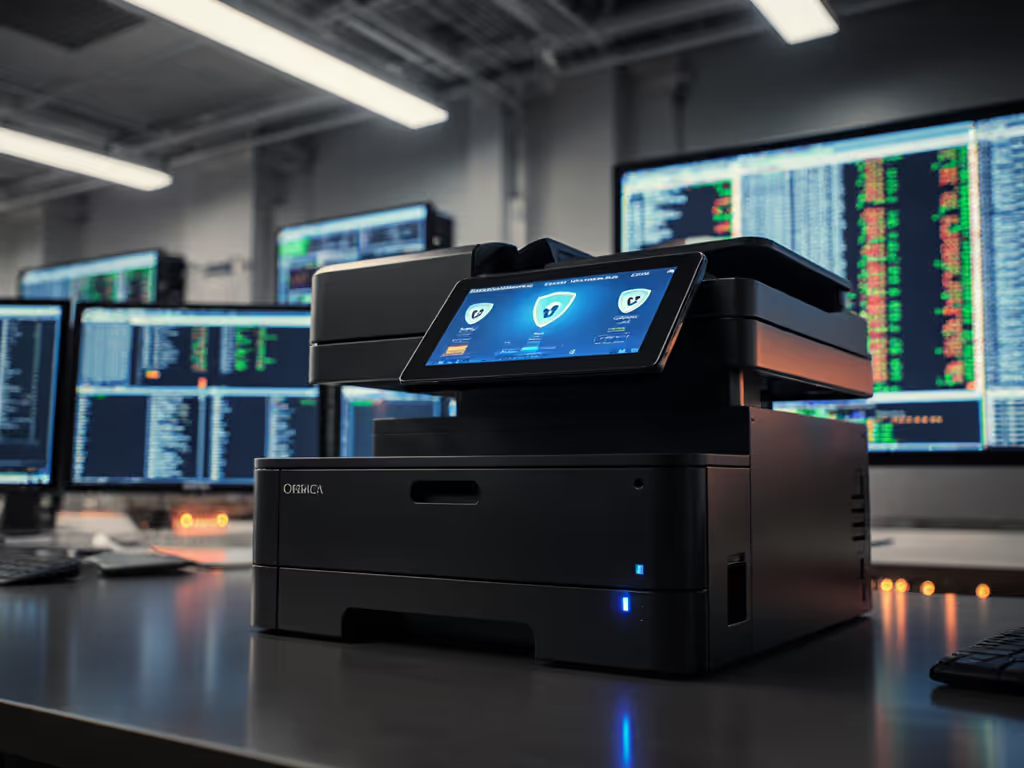
FISMA compliance isn't solely for federal agencies, it's a blueprint for all organizations handling regulated data (like healthcare patient records or financial transactions). The National Institute of Standards and Technology (NIST) defines the controls via SP 800-53, creating a framework that mitigates risks agencies like the Treasury manage daily. For a practical breakdown of essential printer security features that support SP 800-53 controls, see our guide. As seen in government document management systems, non-compliance isn't theoretical: unsecured printers ship with factory settings accepting all network connections, making them easy targets for data theft or ransomware pivoting.
Total cost counts every jam, callout, and empty shelf.
Yet compliance isn't just about avoiding fines. It is about operational continuity. A Treasury audit revealed that print-related breaches stall critical processes like check processing or PII handling, costing $8,000/hour in downtime. FISMA compliant printing forces you to address two often-overlooked vulnerabilities:
- Print servers as attack vectors: Centralized queues pool sensitive data in one exploitable location.
- Device hardening: Unsecured MFD hard drives retain PHI/PII long after jobs print.
Hidden Costs Lurking in Your "Compliant" Fleet
Most buyers assume FISMA adherence means security, that's dangerously incomplete. True compliance requires sustained adherence to controls like NIST SP 800-88 (media sanitization) and FIPS 140-2 (encryption). When retiring devices, follow our secure printer end-of-life protocol to wipe data and recycle responsibly. Here's where costs balloon:
1. "Teaser Rate" Contracts Ignoring Security Gaps
Vendors push low per-page contracts tied to basic FISMA checklists. But if printers lack FIPS 140-2 validated encryption for data at rest (on the hard drive), you'll face:
- Remediation fees to wipe drives manually before disposal
- Fines under HIPAA/FISMA if auditors find unencrypted patient invoices
- Overtime costs from staff reprocessing jobs after breaches
Scenario analysis shows this adds 18 to 22% to lifetime costs versus investing upfront in self-encrypting drives.
2. Supply Chain Blind Spots
Government security requirements mandate chain-of-custody tracking for devices handling classified data. Yet few consider how toner supply chains create exposures:
- Chipped cartridges disabling printers during shortages (common in 2023 to 2024)
- "Secure" firmware updates blocking third-party supplies, triggering emergency orders Learn best practices for firmware update management to avoid outages and security gaps.
- No audit trail for used cartridge disposal (a FISMA continuity failure)
One healthcare client saved $147K/year by switching to universal drivers and multi-source toner agreements, avoiding $220/callout emergency service fees during shortages.
3. Ignoring "Low-Risk" Device Categorization
Per FIPS 199, printers are often miscategorized as "low impact" assets. But NIST SP 800-53 requires all devices to implement controls like:
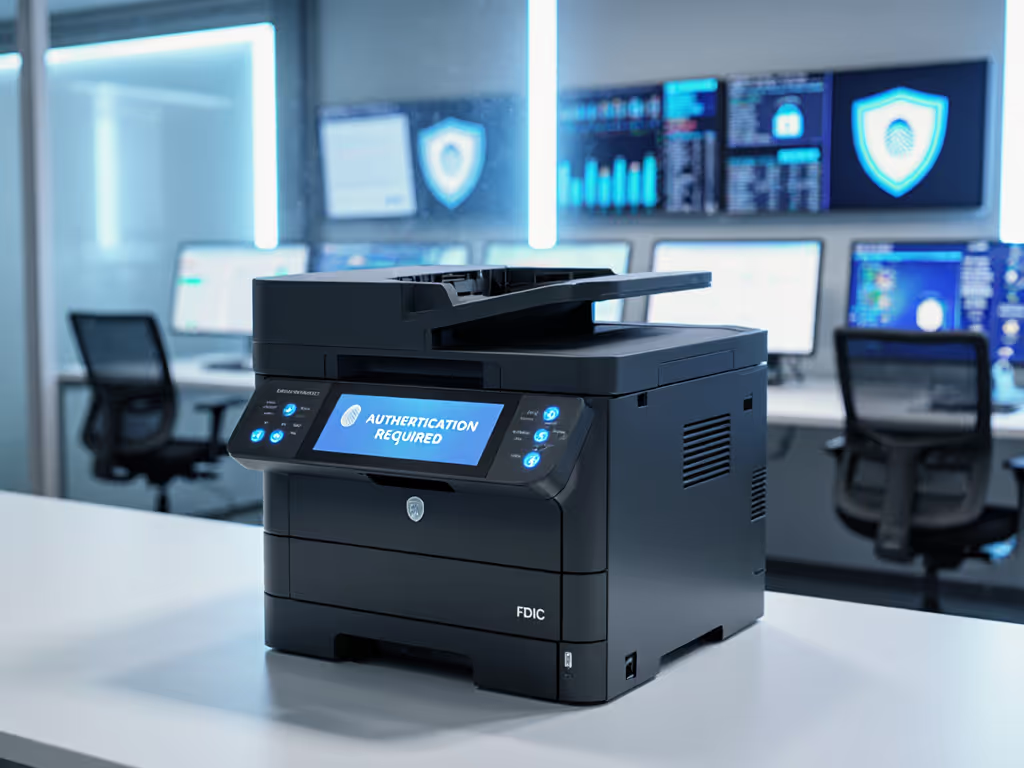
- Role-based access control (stopping unauthorized document release)
- Secure print release (preventing sensitive reports from sitting in trays)
- Continuous monitoring (detecting abnormal scan volumes)
Skipping these for "simple" printers creates liability. A local government agency paid $300K in GDPR fines after unsecured lobby printers leaked voter data, classified as "low risk" until the breach.
Building Predictability: From Compliance Checklist to Cost Control
Government compliant printers should deliver predictable operations, not just audit pass marks. Here's how to avoid cost surprises:
Conduct Rigorous Risk-Based Scenario Analysis
Map your printers' actual data flow: Do HR benefits forms (containing SSNs) print on the same device as meeting agendas? If so, NIST requires higher controls than FIPS 199's default "low impact" rating. Model worst-case scenarios:
- What's the cost if toner supplies are disrupted for 30 days? (Include overtime, shipping surcharges)
- How many helpdesk tickets arise from insecure print release failures?
- Can your SLA enforce credits for downtime exceeding 24 hours?
Demand Line-Item Breakdowns Covering Security Controls
Scrutinize contracts for hidden gaps: Use our total printer ownership cost guide to account for security, supplies, and downtime in your TCO model.
| Line Item | Compliant Requirement | Hidden Cost Trigger |
|---|---|---|
| Hard drive encryption | FIPS 140-2 validation | $150 to $300 manual wipe fees if not self-erasing |
| Firmware updates | Signed, vulnerability patched | $200/hr emergency labor if updates break drivers |
| Supplies | Multi-vendor contracts | $500+/day downtime during toner shortages |
Contract language clarity is non-negotiable. Ban clauses like "security features optional", they invalidate your FISMA posture.
Enforce Continuity Planning Beyond Device Specs
True public sector printer solutions prioritize resilience:
- Universal drivers that work across Windows/Mac/VDI (avoiding $12K/site retraining costs) If you support mixed OS environments, check our printer OS compatibility guide to prevent driver conflicts.
- On-site spare parts for fusers (meeting SLA response times)
- Auto-replenishment with 90-day toner stock (preventing $400/hour production halts)
One finance department stabilized costs by adding a clause: "Vendor pays 200% of downtime cost if parts aren't stocked locally." Monthly costs rose 7%, but lifetime TCO dropped 19% by eliminating emergency fees.
Final Verdict: Predictability Beats Per-Page Teaser Rates
Total cost, not sticker price, defines true compliance. The cheapest government compliant printers are those engineered for five-year predictability, not quarterly budget cycles. Audit your fleet against actual NIST controls (not vendor checklists), model supply chain risks, and demand SLAs with teeth. When federal printing standards are embedded in your cost model, not bolted on, you'll stop firefighting toner shortages and breach reports. You'll have a fleet that's quiet, compliant, and cash-flow stable. That's worth paying for.
Priya Natarajan is a procurement strategist who translates print demand into predictable multi-year budgets. She partners with finance, IT, and vendors to eliminate hidden costs in regulated environments, because the cheapest fleet is the one that stays predictable for its entire life.
Related Articles