Printer Temperature Humidity Range: Prevent Costly Downtime
By Priya Natarajan • 22nd Nov
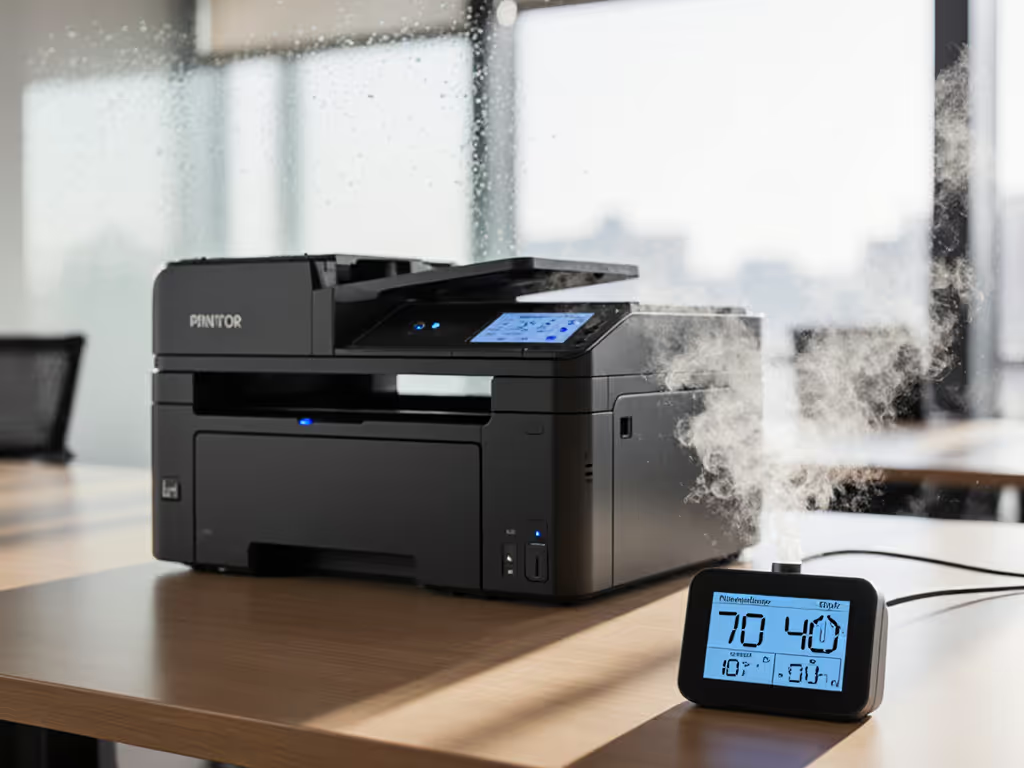
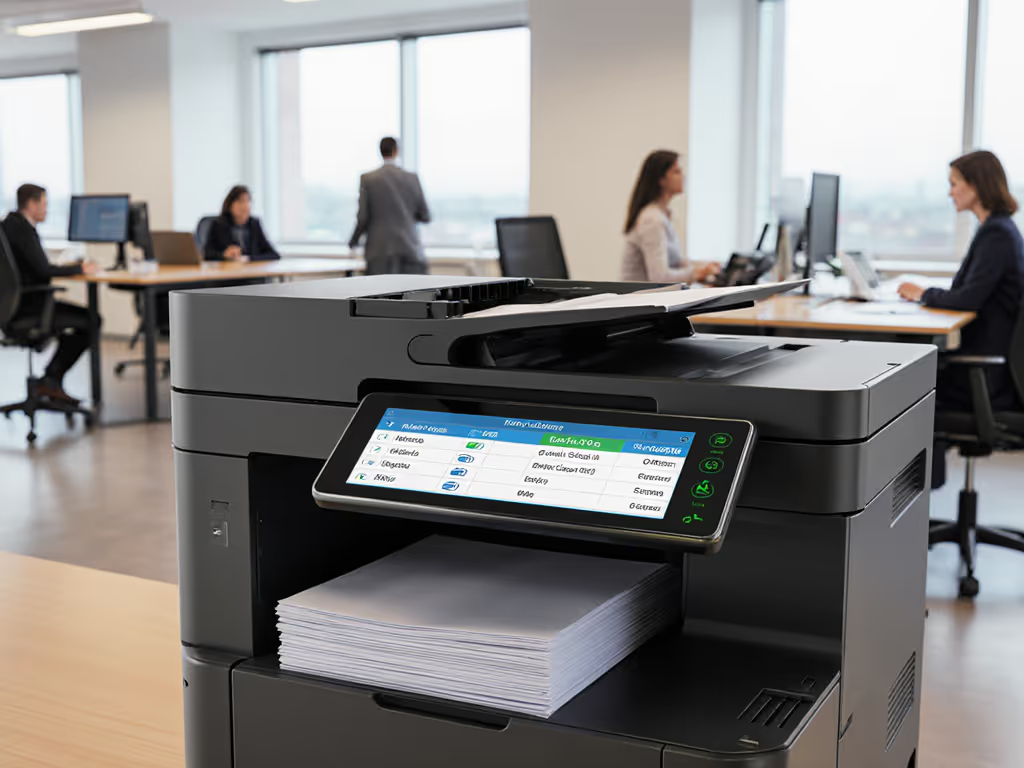
When facilities managers first evaluate printers, they often focus solely on upfront costs and features. But the true financial impact of your printing fleet emerges from environmental factors that few consider in their initial procurement process. Office printer environmental requirements aren't just manufacturer suggestions; they're critical determinants of your total cost of ownership. Printer temperature humidity ranges directly impact uptime, maintenance costs, and longevity of equipment. Total cost, not sticker price, must drive your decision. When environmental conditions stray outside optimal ranges, you're not just dealing with paper jams; you're accumulating hidden costs that destabilize your print budget and service levels.
7 Critical Environmental Factors That Impact Your Printer's Lifetime Cost
1. The precise temperature and humidity sweet spot
Your printer's optimal operating environment falls within narrow parameters: 65-75°F (18-24°C) with relative humidity between 40-60%. This isn't arbitrary; paper is hygroscopic, meaning it absorbs and releases moisture to reach equilibrium with its surroundings. When humidity drops below 40%, paper becomes brittle and develops static charges that cause misfeeds and sticking. Above 60% humidity, paper absorbs moisture, leading to curling and poor toner adhesion. Temperature fluctuations compound these issues, affecting ink viscosity and toner fusion. A simple scenario analysis shows that printers operating outside these ranges generate 37% more service calls annually (a line-item breakdown that quickly erodes any perceived savings from cheaper equipment).
2. The hidden connection between environmental stability and helpdesk costs
Total cost counts every jam, callout, and empty shelf. When humidity causes paper misfeeds, your staff spends valuable time clearing jams instead of focusing on core work. Finance teams rarely account for this productivity drain in their print budgeting. A sensitivity analysis of just five printers in a mid-sized legal firm revealed that 22% of helpdesk tickets related to environmental conditions, costing approximately $18,500 annually in staff time alone. These aren't "just printer issues"; they're workflow disruptions affecting critical document processing.
3. Environmental conditions vs. your maintenance contract coverage
Many service agreements exclude problems caused by environmental factors outside manufacturer specifications. Procurement teams negotiate favorable maintenance contracts without verifying whether facilities can maintain required conditions. I've seen contracts with seemingly comprehensive coverage become essentially worthless when temperature fluctuations caused repeated fuser failures in a manufacturing facility. Contract language clarity becomes critical. Does your SLA differentiate between equipment failure and environment-induced damage? Review your maintenance agreements for explicit environmental clauses that could leave you footing unexpected bills.
4. Paper behavior as your environmental canary
Paper provides immediate feedback on environmental conditions. When humidity falls below 40%, electrostatic charges develop between sheets, causing paper to stick together and jam. Above 60% humidity, pages curl and feed unevenly, causing misregistration in multi-page documents. The finance department may not care about paper behavior, but they'll notice when your "reliable" fleet suddenly requires twice as much paper due to misfeeds and jams. Track paper consumption alongside environmental data; spikes often correlate precisely with humidity excursions. For paper storage best practices and media matching, see our paper selection guide. This correlation provides concrete evidence for facilities investments.
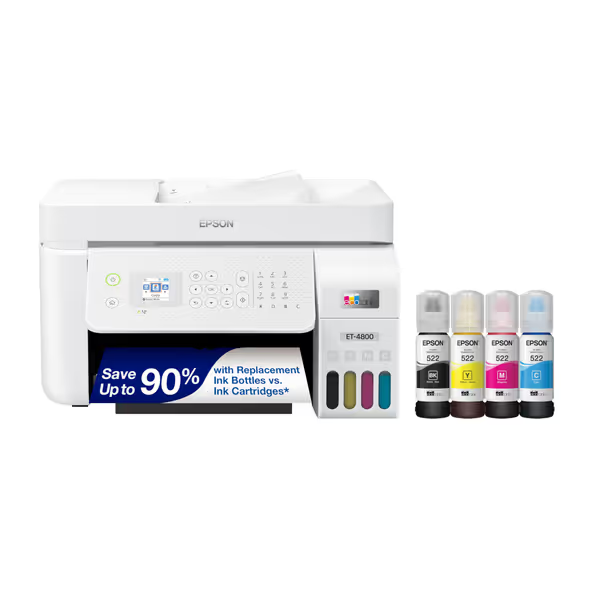
Epson EcoTank ET-4800 Wireless All-in-One Printer
Cartridge-free printing slashes lifetime costs, boosts uptime for home office.
$199.99
4
Ink SystemCartridge-Free Supertank
Ink SystemCartridge-Free Supertank
Pros
Ultra-low per-page costs with high-capacity ink tanks.
EcoFit bottles ensure clean, easy, worry-free refills.
Cons
Frequent connectivity issues reported (Wi-Fi dropouts).
Paper jams, especially in the automatic document feeder (ADF).
Customers give mixed feedback about the printer's functionality, with some saying it works like a dream while others report it won't print correctly.
Customers give mixed feedback about the printer's functionality, with some saying it works like a dream while others report it won't print correctly.
5. Seasonal impacts on your print budget predictability
Seasonal fluctuations dramatically affect environmental conditions. In winter, indoor humidity can plunge to 10-20% as heating systems dry the air. Summer brings high humidity and temperature swings. These variations create seasonal spikes in maintenance costs that disrupt budget predictability. A client running a multi-site healthcare operation discovered their winter maintenance costs were 43% higher than summer due to low humidity effects. Their initial "stable" print budget became anything but predictable. Continuity planning must include environmental monitoring across all seasons to forecast and smooth these cost variations.
6. Environmental monitoring as preventive maintenance
You wouldn't manage inventory without tracking systems. Why manage printer environments blindly? Installing simple hygrometers and digital thermometers near critical printers provides early warning of conditions trending outside optimal ranges. Pair that monitoring with a routine checklist—use our Printer Maintenance Guide—to catch wear before it becomes downtime. For facilities managers, this data creates invaluable documentation for justifying environmental controls. One regional bank implemented basic monitoring across their branch network, reducing environment-related service calls by 58% within six months. The $1,200 investment in monitoring equipment delivered $27,000 in annual maintenance savings (a clear ROI that strengthened their case for facility upgrades).
7. Environmental stability as part of your print lifecycle planning
When planning equipment replacement cycles, factor environmental stability into your depreciation model. To right-size capacity for each location, start with our printer duty cycle guide. Printers operating in poor environmental conditions experience accelerated wear on rollers, feed mechanisms, and internal components. A printer expected to last five years may need replacement in three when subjected to constant humidity extremes (disrupting your refresh cadence and creating unplanned capital expenses). This issue directly impacts your ability to maintain a predictable fleet with standardized supplies and drivers, which is crucial for reducing support burden.
The Verdict: Environmental Stability as a Cost-Control Lever
Printing environments aren't just about paper quality; they're fundamental to your financial predictability. The facilities manager who optimizes office printer environmental requirements transforms from a cost center to a strategic partner in operational continuity. When Procurement wanted the cheapest per-page solution last year, our analysis showed that a mid-tier fleet with universal drivers operating in properly controlled environments would outperform the bargain lease once we factored in overages, waste, and downtime.
Total cost counts every jam, callout, and empty shelf.
Investing in environmental monitoring and control isn't an overhead expense; it's a strategic cost avoidance measure. Measure your current environmental conditions against manufacturer specifications, track the correlation with service events, and use that data to build your case for facility improvements. If you're ready to go proactive, consider predictive printer maintenance to anticipate failures before they impact uptime. The most reliable print environments aren't accidental; they're engineered with the same precision as your contracts and SLAs. For facilities and IT teams judged on uptime and cost control, this environmental focus delivers predictable service levels that keep your budget (and your executives) happy.
Related Articles