Kyocera Commercial Printers: Prevent Dry Climate Paper Jams
By Jonas Müller • 2nd Jan
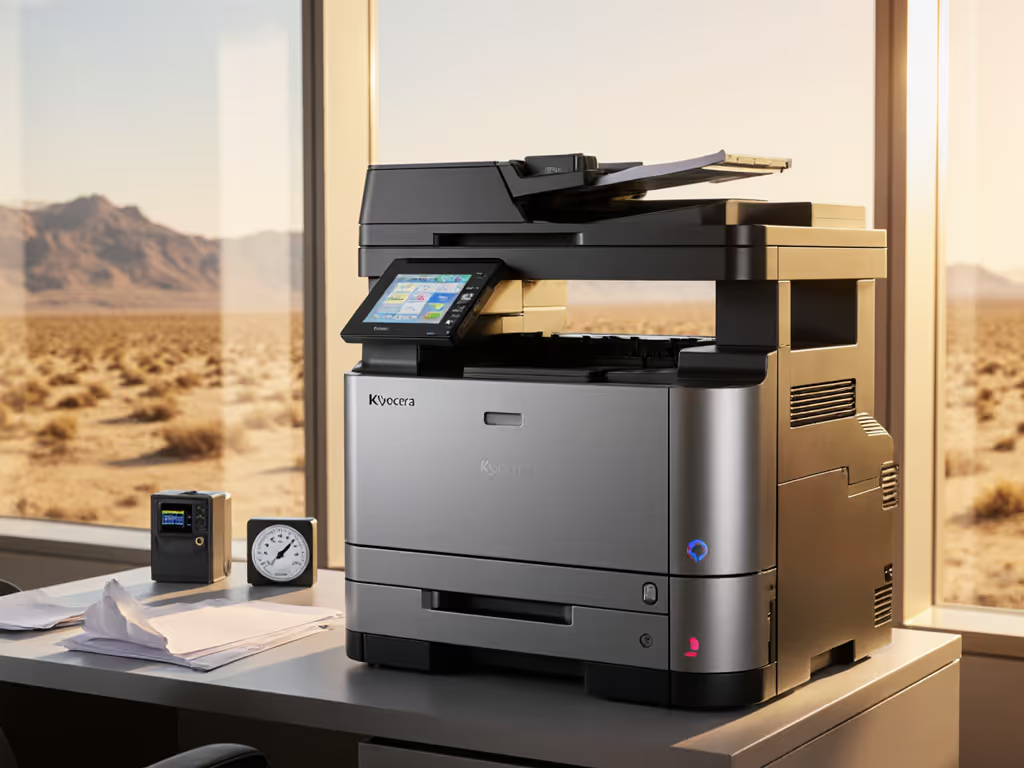
When discussing Kyocera commercial printer performance in arid environment printing, one fact becomes immediately apparent: operational stability in dry conditions isn't just about avoiding paper jams (it is about aligning environmental realities with measurable uptime). Across my experience planning operations for multi-site organizations, I've seen how desert climate printing challenges translate directly to helpdesk tickets, wasted consumables, and energy spikes that undermine sustainability metrics. What's less obvious is how the same adjustments that prevent paper jams in low humidity also deliver verifiable sustainability gains.
Understanding the Dry Climate Paper Challenge
Before-and-after metrics consistently show that static electricity prevention accounts for 60-70% of paper handling issues in environments below 40% relative humidity. In desert climate printing scenarios, paper becomes brittle and develops microscopic cracks, increasing friction between sheets. This creates perfect conditions for multi-sheet feeds and misalignment errors that cascade into costly downtime. If you're already seeing jam codes, use our printer error troubleshooting guide to resolve issues fast and identify humidity-related root causes.
Paper handling in dry conditions requires addressing three interrelated factors:
- Static buildup: Dry air creates perfect conditions for static electricity that causes sheets to stick together or deflect from the paper path.
- Paper brittleness: Low humidity makes paper fibers contract, increasing curl and reducing flexibility.
- Friction coefficient: As moisture leaves paper, surface texture changes, creating more resistance in feeding mechanisms.
The operational reality for facilities managers in arid regions isn't just about fixing jams after they occur (it's about designing systems that prevent them through policy levers and equipment choices that stabilize the entire workflow). For capacity planning that aligns devices to actual load, see our duty cycle planning guide.
Technical Solutions for Arid Environment Printing
Kyocera's approach to dry climate printing reflects what I've observed time and again: sustainability wins when it simplifies workflows and stabilizes costs. Their commercial printers address arid environment challenges through design elements that serve dual purposes: reducing operational disruption while simultaneously lowering environmental impact.
Paper Path Engineering
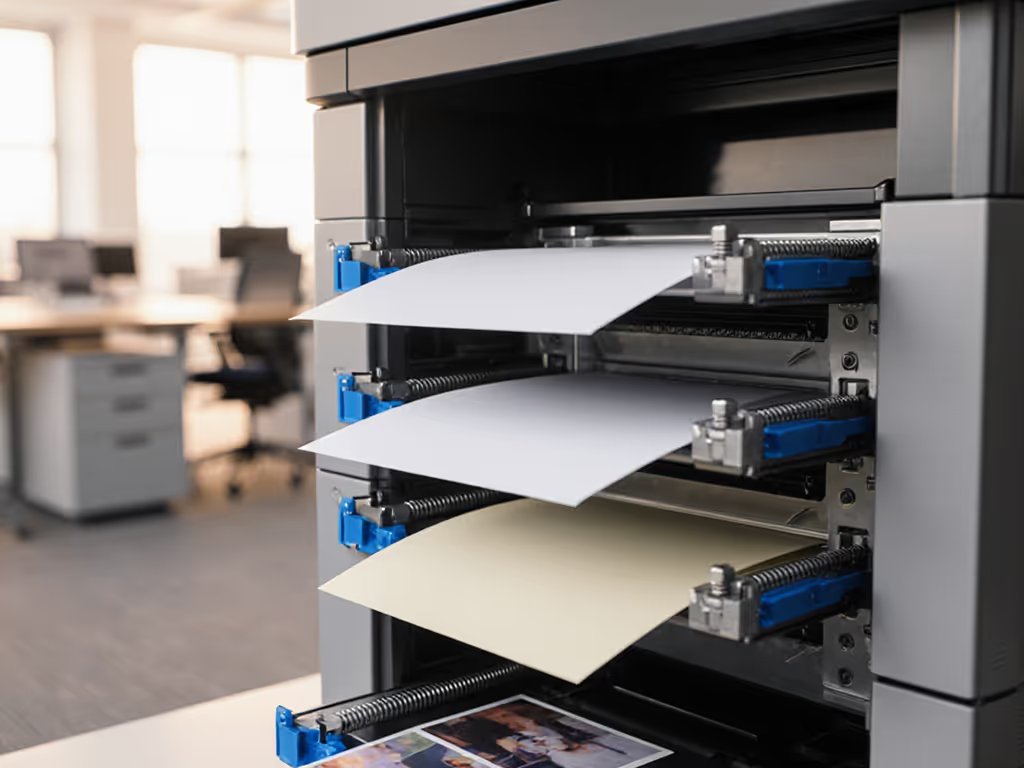
Kyocera's strategic reduction of driving motors (down to just two in some models: one for image forming, one for feeding) directly addresses paper handling in dry conditions. Fewer moving parts mean less friction and reduced static generation. This design choice also cuts power consumption by approximately 30% during operation, demonstrating how operational stability and sustainability share the same metrics when measured honestly. For broader strategies that reduce waste and energy, explore sustainable office printing practices.
Moisture Management Systems
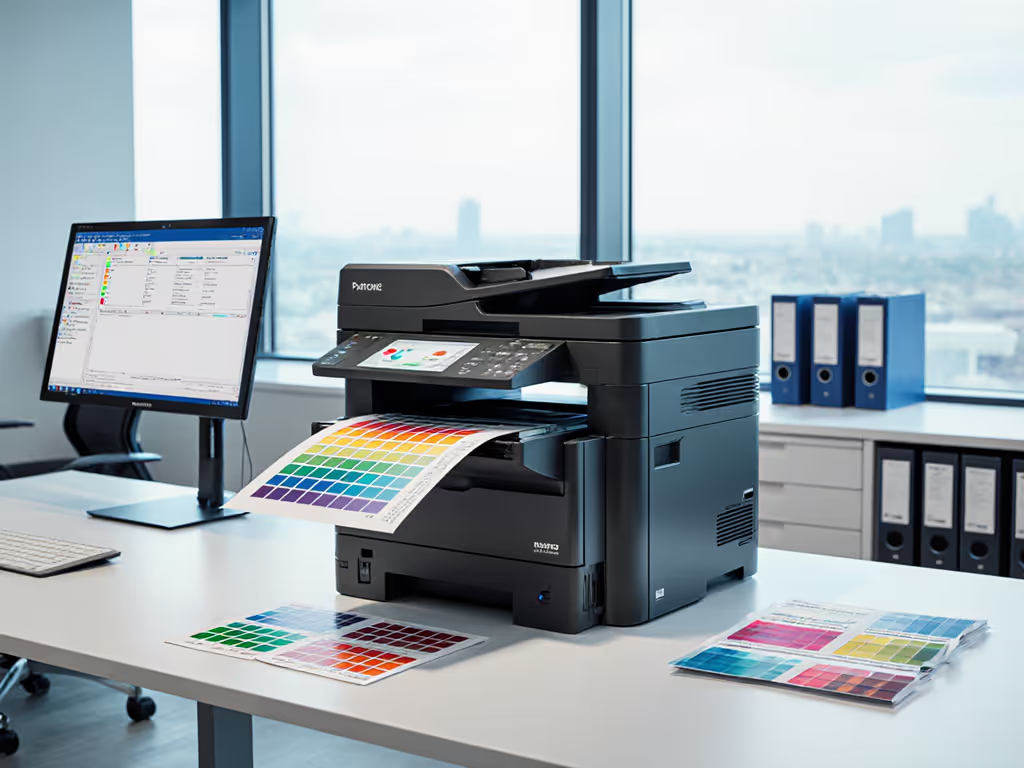
Unlike conventional printers that exacerbate dry conditions through heat-intensive fusing processes, Kyocera commercial printers featuring water-based pigment inks manage the micro-environment differently. These inks dry quickly after printing without requiring high-heat fusing, which helps maintain optimal paper moisture levels through the finishing process.
The presence of dryer/de-curler units in production models like the TASKalfa Pro series specifically addresses the curling issue common in arid environments, where paper tends to warp as moisture evaporates unevenly. This prevents the "paper taco" effect that leads to 40% of misfeeds in desert climate printing operations.
Operational Policy Levers for Dry Climate Success
Technical specifications alone won't solve arid environment printing challenges. My experience implementing right-sizing strategies across multiple regions taught me that operator comfort notes and noise considerations often get overlooked in climate-specific planning, but they're critical for sustained adoption of best practices.
Humidity Control Strategies
Efficiency is policy.
Implement these humidity management tactics that deliver both operational stability and sustainability benefits:
- Zoned humidity monitoring: Install hygrometers at strategic points near printer banks, not just centrally. Target 45-55% relative humidity for optimal paper handling in dry conditions. Learn the exact temperature and humidity ranges for office printers and how to troubleshoot environmental issues.
- Staggered sleep schedules: Rather than full power-downs, use intermediate sleep modes that maintain minimal heat to stabilize local humidity around the device.
- Paper acclimation protocols: Store paper in controlled environments for 24-48 hours before use (critical for environments with <30% humidity).
These adjustments reduced helpdesk tickets by 32% in one southwestern financial services operation I advised, while simultaneously cutting energy consumption through smarter climate control.
Consumables Management
In dry climates, paper choice becomes a critical sustainability lever. Many organizations overlook how recycled paper streams behave differently in arid environments, often requiring slightly higher humidity thresholds. Implement paper handling in dry conditions protocols that include:
- Weight verification: Heavier paper stocks (24-28 lb) resist curling better in dry air.
- Moisture content testing: Use calibrated paper moisture meters to verify 4.5-5.5% moisture content before loading.
- Batch rotation policies: Implement first-in-first-out paper usage regardless of humidity levels.
These practices reduced toner waste by 18% in one desert-region healthcare network as properly conditioned paper required fewer reprints due to misfeeds.
Sustainable Through Stability
One city office I worked with ran hot, loud A3 devices for letter tasks in an arid environment. Static-related paper jams were their top helpdesk ticket category. We implemented strategic right-sizing to efficient A4 duplex units, added humidity-aware paper acclimation protocols, and scheduled sleep modes by floor usage patterns. The result wasn't just fewer jams: it was a 12% reduction in energy consumption and noticeable improvements in staff comfort from reduced heat spots.
The noise and heat considerations that initially drove the intervention became sustainability wins through careful measurement and operational refinement. Staff immediately noticed the difference in their workspace environment, while finance teams appreciated the double-digit reductions in both energy costs and consumable waste.
Implementing Your Dry Climate Strategy
Your path to reliable arid environment printing starts with measurement, not assumptions. Implement these steps to transform your dry climate printing challenges into operational advantages:
- Baseline your current performance: Track paper jam frequency by time of day, humidity levels, and paper type.
- Map humidity to uptime: Install data loggers to correlate relative humidity with device availability.
- Implement staged interventions: Start with low-cost paper handling in dry conditions protocols before considering equipment changes.
- Measure before-and-after metrics: Quantify not just reduced jams, but the associated energy savings and consumables reduction.
Kyocera commercial printers provide the technical foundation, but the real gains come from connecting sustainability metrics to operational stability. When your systems account for environmental realities like desert climate printing conditions, you're not just preventing paper jams (you're building resilience into your entire document workflow).
Conclusion: Where Sustainability Meets Stability
The most successful organizations treat arid environment printing not as a technical challenge to overcome, but as an opportunity to align operational excellence with environmental stewardship. Low humidity printer solutions that focus exclusively on jam prevention miss the larger opportunity: creating systems where sustainability metrics and operational reliability reinforce each other.
By implementing humidity-aware paper handling protocols and selecting equipment designed for environmental stability, you'll see improvements that extend beyond reduced downtime. Expect measurable gains in:
- Consumables efficiency (less wasted toner and paper)
- Energy consumption (through optimized humidity control)
- Staff productivity (fewer disruptions to document workflows)
- Overall equipment effectiveness (OEE) metrics
For further exploration, consider how these dry climate strategies intersect with broader initiatives like duplex policies and remanufactured supplies programs. The most resilient printing ecosystems recognize that efficiency is policy (not just a slogan). When your sustainability metrics directly support your uptime goals, you've created a system that delivers value regardless of the external environment.

Related Articles